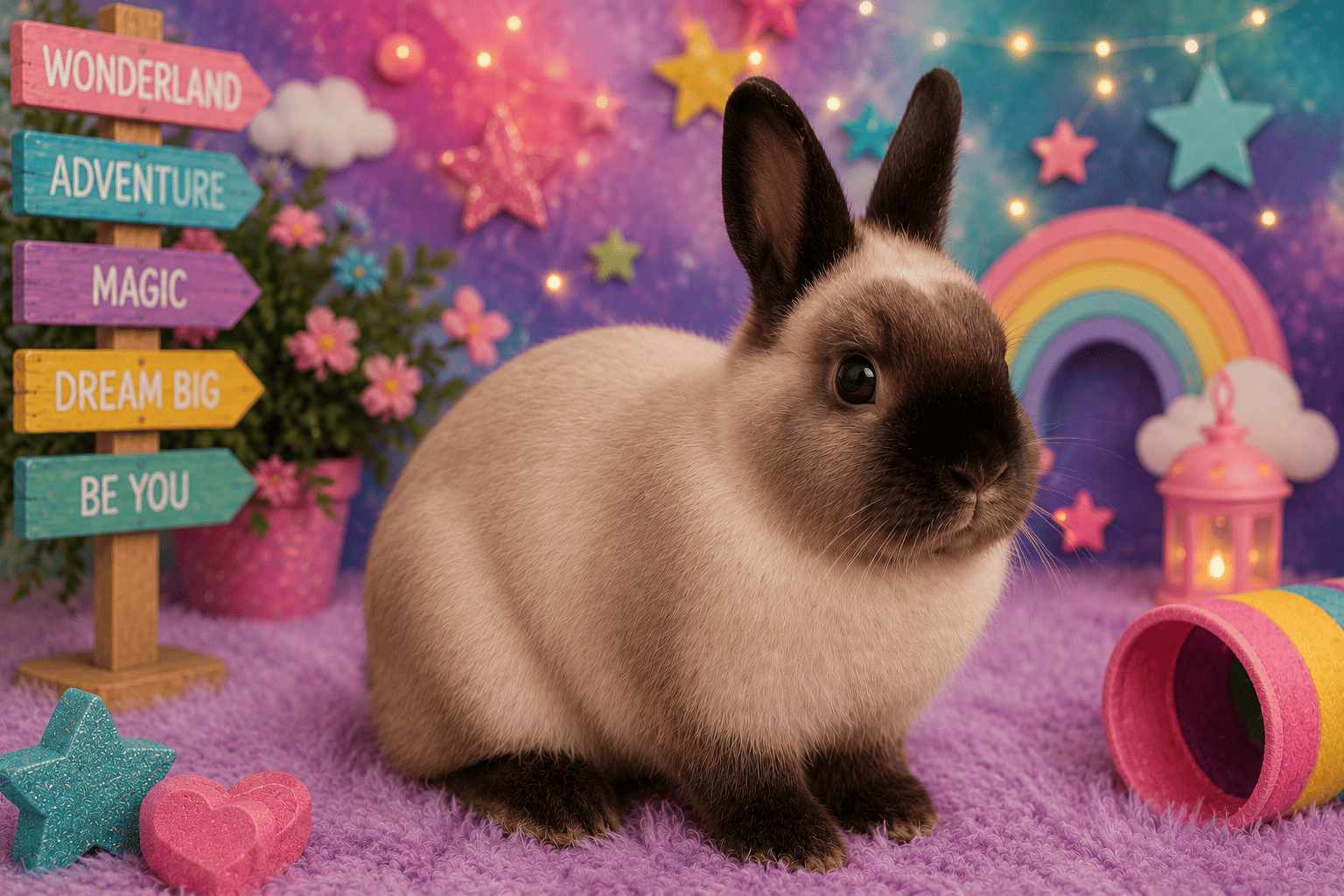
Himalayan Rabbit
The Himalayan Rabbit is a slender small rabbit breed known for its white body and dark points on the ears, nose, feet, and tail. This breed has a calm personality, distinctive markings, and a long, narrow body type that makes it easy to recognize.
About the Himalayan Rabbit
Himalayan Rabbits are best known for their clean white body and dark points. The nose, ears, feet, and tail are usually darker, creating a clear contrast against the white coat.
Many Himalayans are described as gentle, calm, and easy to handle when treated patiently. Like all rabbits, individual personality can vary, but this breed is often appreciated for its relaxed nature.
Himalayan Rabbits have a slender body type and need safe housing, daily exercise, proper diet, enrichment, gentle grooming, and regular health observation.
Appearance
Himalayans have long narrow bodies, short coats, and dark points on the ears, nose, feet, and tail. Their pointed pattern is the breed's most recognizable feature.
Personality
This breed is often described as gentle, calm, and relaxed. Patient handling, routine care, and a peaceful environment can help a Himalayan Rabbit feel secure.
Care Level
Himalayan Rabbits need daily hay, fresh water, safe greens, clean housing, gentle grooming, nail trimming, safe exercise, and regular health checks like any domestic rabbit.
Himalayan Rabbit Breed Traits
Best Known For
White body, dark points, slender body type, gentle temperament, and distinctive pointed markings.
Grooming Needs
Their short coat is usually easy to maintain. Gentle brushing during shedding helps remove loose fur and keep the coat neat.
Good For Beginners?
Himalayan Rabbits can work for prepared beginners who understand rabbit housing, diet, exercise, grooming, handling, and routine veterinary care.
Indoor Rabbit Potential
Himalayans can live indoors with a safe enclosure, rabbit-proofed exercise space, enrichment toys, clean flooring, and consistent care.
Caring for a Himalayan Rabbit
A Himalayan Rabbit needs unlimited grass hay, fresh water, a clean living area, rabbit-safe chew toys, daily exercise, and a safe environment. Their white coat may show dirt more easily, so clean housing is especially helpful.
Owners should provide gentle handling, a steady routine, enrichment, and regular grooming during shedding. Appetite, droppings, behavior, teeth, nails, coat condition, and comfort should be monitored.
A veterinarian familiar with rabbits is the best source for health, diet, and medical advice. RabbitBreedGuide.com provides general educational information, not veterinary diagnosis.
Frequently Asked Questions About Himalayan Rabbits
Are Himalayan Rabbits good pets?
Himalayan Rabbits can make good companion rabbits for owners who want a gentle, small rabbit and are prepared for proper daily care.
What makes Himalayan Rabbits easy to recognize?
They are known for a white body with dark points on the ears, nose, feet, and tail.
Do Himalayan Rabbits need a lot of grooming?
Their short coat is usually manageable, but gentle brushing during shedding helps remove loose fur and keep the coat clean.
Are Himalayan Rabbits good for first-time owners?
They can be, as long as the owner is ready for safe housing, proper diet, exercise, gentle handling, grooming, and veterinary care.